The Day the Rainbow Didn’t Look So Rainbow
The Day the Rainbow Didn’t Look So Rainbow
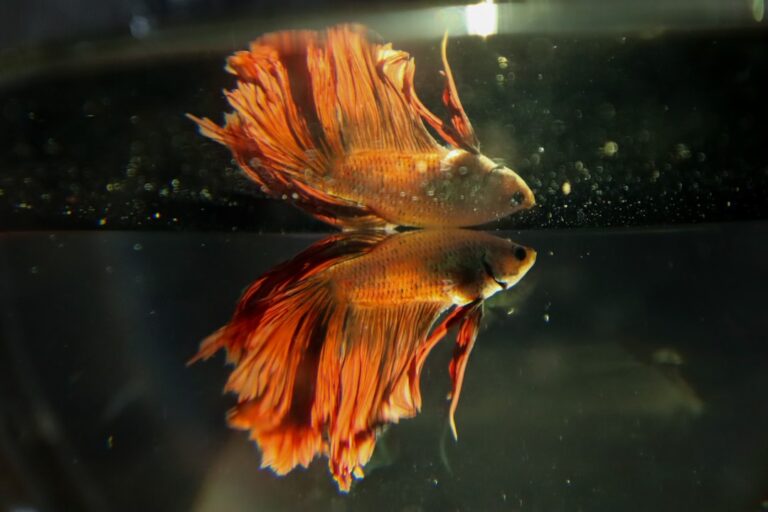
The first sign wasn’t a white patch, not really. It was a shimmer that looked wrong—like someone had taken a single scale on my largest male rainbowfish and replaced it with a tiny piece of frosted glass. I noticed it at 11 p.m. on a Tuesday, which is apparently when all aquarium problems choose to reveal themselves, because the lights were off and the tank had that strange blue-green glow from the moonlight LEDs. I’d been sitting on the floor in front of the 75-gallon, watching the shadows move, when this one fish drifted past the light wrong.
I leaned closer. The glass was cool against my forehead. The fish came around again, and I saw it clearly: a patch of something grey-white near the base of the dorsal fin. Not fluffy like fungus. Not cottony. Just… wrong. Like a milk scum on the surface of the scale. I turned the lights on and the shimmer vanished into the brightness. Fish looked normal. Everything looked normal. I told myself it was nothing and went to bed, but I didn’t sleep well.
By morning the patch had grown, and now there was a second one on the same fish’s tail peduncle. The fish was still eating—rainbowfish always eat—but it was holding itself a little back from the others, not quite schooling. That’s when I started searching forums at 6 a.m. with coffee that went cold before I drank it.
What I Found in the Search Results
Every forum post about columnaris starts the same way: “Could be fungus. Could be columnaris. Try salt.” And then thirty replies arguing about dosage, species sensitivity, whether marine salt is the same as aquarium salt, whether Epsom salt works, whether you’re an idiot for using table salt. I spent two hours reading and came out less sure than when I started.
Columnaris—Flavobacterium columnare—isn’t a fungus at all. It’s a bacteria that looks like fungus because it produces these microscopic tendrils that spread across the fish’s body. The online photos are terrifying: fish with mouths eroded, fins turned to white mush, patches that look like saddle marks across the back. My fish wasn’t that bad. Not yet. But the patches were spreading in a straight line down the flank, which is one of the things people warned about. Columnaris tends to follow the lateral line.
I called a guy at a LFS I’d dealt with before. Not his real name—let’s call him Mike, though that’s not it either. Mike runs the fish room at a store about forty minutes from my place, and he’s the kind of person who will tell you you’re wrong in a way that somehow doesn’t feel insulting. I described the patches.
“Does it look like a saddle?” he asked.
“I don’t know. Maybe? It’s more like… a line. A streak.”
“That’s lateral line involvement. That’s columnaris, not fungus. Fungus doesn’t follow the lateral line like that. Fungus is more random.” He paused. I heard a tank filter humming on his end. “You’re gonna want something stronger than salt. Salt works on some strains, but you’ve got the wrong fish for prolonged salt exposure anyway. Rainbows don’t love salt baths.”
I told him I’d already considered salt. A lot of online advice starts with salt. He didn’t argue, just said, “It’s your fish,” in that tone that means “I’ve already told you what I’d do.”
The Salt Bath I Almost Did
Here’s the thing about salt baths: they’re easy. You mix a bucket, you dip the fish, you watch it twitch for thirty seconds, you return it. There’s something satisfying about that kind of simplicity. A clear action with a clear before and after. I had the aquarium salt on my shelf. I had the bucket. I’d treated velvet with salt before and it worked fine. Part of me wanted to just do the salt bath, close the bucket, feel like I’d solved something.
But I kept thinking about what Mike said about rainbows and salt. Rainbowfish have that delicate slime coat—it’s part of why they shimmer the way they do. That iridescence isn’t pigment; it’s structural, layered cells that refract light. Salt strips slime coats. It’s the mechanism, actually—salt dehydrates the bacteria, but it also dehydrates the fish’s protective mucus layer. A short bath might work. A prolonged treatment could do more damage than the bacteria.
I also thought about columnaris itself. Columnaris isn’t one strain. There are cold-water strains that respond to salt, and warm-water strains that laugh at it. My tank runs at 78 degrees—warm end of the range for rainbows, perfect for the aggressive strain. If I had the warm-water strain, I’d waste three days watching salt not work while the bacteria spread. By then, the fish might be too far gone.
So I didn’t do the salt bath. I put the salt back on the shelf and drove to the fish store instead. The bucket sat empty in the garage for two weeks.
The Trip to Mike’s Store
The store is in an old strip mall between a laundromat and a tax preparation office. The sign out front says “Tropical Fish” in letters that haven’t been replaced since the 90s, and the glass door has a crack in the bottom corner that’s been there as long as I’ve known the place. Inside, the lights are fluorescent and the air smells like wet filter media and the particular kind of rot that comes from frozen bloodworms thawing.
Mike was at the back, unpacking a shipment. Boxes everywhere, bags floating in a styrofoam cooler. He waved me over without looking up.
“Bring a photo?” he asked.
I showed him the video on my phone—the fish circling, the grey patch catching the light. He watched it twice, then reached into a drawer under the counter and pulled out a bottle of something I didn’t recognize. Kanamycin, I think. Maybe nitrofurazone. He said the name but it didn’t stick. What stuck was what he said next:
“The problem with columnaris is that by the time you see it, it’s been there for days. The bacteria grows fast once it breaches the slime coat. You’re not treating what you see. You’re treating what you don’t see yet.”
He sold me a bottle of antibiotic blend—the kind that comes as a powder you mix into food, not the water. “Feed it to them,” he said. “They’re still eating. That’s your window. Once they stop eating, you’re fighting a different fight.”
I also bought a bottle of Stress Guard, which he recommended as a slime coat supplement. “Not a cure,” he said. “But it buys time. It helps the fish maintain the barrier while the antibiotic works from inside.”
Total came to about 38 dollars. I’d spent more on plants I’d killed in a week.
What the Treatment Actually Looked Like
Treating columnaris through food is different from treating it through water. It’s slower, for one thing. You’re waiting for the fish to eat the medicated food, absorb the antibiotic through the gut, and then have it reach the bacteria through the bloodstream. It’s not like dumping something into the water and watching it diffuse. It’s faith-based treatment. You prepare the food, you feed it, and you wait.
The powder smelled like nothing. I mixed it with a little garlic juice—an old trick to make medicated food more palatable—and let it soak into some frozen brine shrimp. The rainbows went for it immediately. Rainbowfish are pigs. They’d eat gravel if you seasoned it right.
For the first three days, I saw no change. The patches stayed the same size, maybe a little bigger. The infected fish still held itself apart from the others. I started to doubt the strategy. I even filled a bucket with tank water and sat it on the floor, ready for a salt bath if things got worse. The bucket sat there, full and useless, for two days. I kept looking at it and not doing anything.
On day four, the patches looked different. Not smaller—but less opaque. Like the frosted glass was starting to clear from the edges inward. The fish was schooling again, not quite back in the middle of the group, but no longer hovering at the edges like a nervous kid at a party. I fed the medicated food for two more days, then switched to plain food and watched.
By day seven, you couldn’t see the patches unless you knew where to look. By day ten, they were gone.
The Thing I Still Don’t Know
I’m not sure the antibiotic was the right call. Or rather, I’m not sure it was the only call. Maybe the salt bath would have worked. Maybe the fish’s immune system would have fought it off on its own. Maybe I treated a mild infection that would have resolved with cleaner water and better feeding. There’s no way to know. You don’t get a control group with your own fish.
What I do know is that I spent 38 dollars instead of a bucket of salt I already owned. I made a decision based on one person’s opinion and a handful of forum posts. And it worked. But that kind of success is dangerous—it makes you think you know what you’re doing, when really you just got lucky with the strain.
I still have that bucket in the garage. It’s empty now. I put it back on the shelf next to the salt. It’s not a bad tool. It’s just not the only tool. And columnaris doesn’t care about your tools. It cares about timing. I caught it early. That’s the only reason I’m writing this instead of burying a fish in the backyard.
I won’t tell anyone what to do. That’s not the point. But if you’re reading this at 11 p.m. with a fish that looks wrong and a cold cup of coffee, maybe consider that the easy answer isn’t always the right one. Sometimes the bucket stays empty. Sometimes that’s the best outcome.
📷 Photos: Tien Vu Ngoc (Unsplash)