The Betta That Wasn’t Supposed to Make It
The Betta That Wasn’t Supposed to Make It
The fish arrived on a Tuesday afternoon, shipped in a bag no larger than a sandwich. The courier had left it on the doorstep in direct sunlight — three hours, maybe four. By the time it was opened, the water inside was warm to the touch, and the betta was listing sideways at the bottom of the bag, its fins ragged and white at the edges like fabric chewed by moths.
This was not a promising beginning. Fin rot in bettas is common enough — dirty water, stress, a weak immune system — but the advanced stage visible in that small plastic bag suggested something closer to a death sentence than a treatable condition. The white edges had already begun to creep up the fin rays, and a faint pink inflammation traced the line where healthy tissue met dying. Standard advice recommends treatment at the first sign of fraying. This fish was well past that mark.
“Most people would have flushed it,” says Marcus Tran, who runs a specialty aquarium supply shop in Kuala Lumpur’s Petaling Street district and has seen hundreds of bettas arrive in worse-for-wear condition. “Or thrown in some medication and hoped for the best. The mistake is always the same — they want to fix it fast, and fast usually makes it worse.”
The owner of this particular fish, a graphic designer who keeps a modest collection of planted tanks, had other ideas. They’d read something, six months earlier, on a forum post buried deep in an archived thread about Southeast Asian blackwater biotopes. It mentioned Indian almond leaves — Terminalia catappa — as a traditional remedy for fin rot, used by breeders in Thailand and Indonesia for generations. The post was short, unsourced, and contained no dosage instructions. It was exactly the kind of information most aquarists would scroll past.
Three Leaves from Behind a Hawker Center
Indian almond leaves are not exotic. They fall from trees that grow in every tropical city across Southeast Asia — along roadsides, in public parks, beside drainage canals. In Malaysia, they’re more likely to be swept into piles and burned than collected for aquarium use. The leaves decompose slowly in water, releasing tannins, humic acids, and a handful of compounds that create the dark, tea-colored water characteristic of blackwater habitats. Wild bettas live in exactly this kind of environment — shallow, slow-moving water stained brown by decaying plant matter, with a pH that would make most tap-water keepers nervous.
The designer collected leaves from a tree behind a local hawker center, where they’d fallen onto concrete and dried naturally. They washed them in dechlorinated water — not scrubbed, just rinsed — and dropped three leaves into a small quarantine tank. The betta went in next. No heater, no filter, no light. Just the fish, the leaves, and the patient brown water that darkened over the next 48 hours until it looked less like an aquarium and more like a cup of over-steeped tea.
The betta didn’t move for the first day and a half. It sat on the bottom, fins clamped, breathing shallow and fast. The water temperature stabilized at 26 degrees Celsius — room temperature in Kuala Lumpur’s climate, which rarely drops below that even at night. There was no visible improvement. The white edges on the fins had not receded. If anything, they looked more defined, as though the rot was drawing a sharper line around what it intended to take.
“Day two is always the worst,” Tran says. He’s seen this pattern many times, though usually with fish that don’t survive it. “The leaf is working, but it’s not a chemical. It doesn’t kill the bacteria instantly. It changes the environment, and the fish has to adjust before the body can start fighting back.”
On day three, the betta swam upward for the first time. Not far — just a few inches off the bottom, repositioning itself near a patch of leaf that had settled against the glass. It took a single breath at the surface, then sank back down. The fins were still clamped, but the clamped posture looked different now: less like defeat, more like rest.
The Science Nobody Talks About
The mechanism behind Indian almond leaves is not well understood by the general aquarium hobby, though it has been studied in limited contexts. The leaves contain flavonoids, tannins, and saponins — a combination that appears to inhibit bacterial growth while promoting mucous membrane repair in fish. In practical terms, this means two things: the leaves create an environment where fin-rot bacteria struggle to reproduce, and they give the fish’s own immune system a chemical boost to close the gap.
“The tannins acidify the water slightly,” explains Dr. Lim Pey Shin, a research associate at the University of Malaya’s Institute of Biological Sciences who studies ornamental fish health in closed systems. “That alone reduces stress on a betta, because they’re adapted to acidic conditions. Most bettas in captivity are kept in neutral or slightly alkaline water, which is a constant low-level stressor. The leaf corrects that.”
The pH shift is not dramatic — from 7.2 to roughly 6.4 over five days in this case — but the effect on the fish’s behavior was unmistakable. By day five, the betta was swimming in short, deliberate patrols around the tank, pausing to investigate the surface film. The white edges on its fins had stopped advancing. A thin line of darker tissue had appeared at the border between rot and healthy fin — the first visible sign that the body was walling off the damaged area.
Most online guides recommend changing the leaves every three to four days, replacing them with fresh ones to maintain tannin concentration. The designer did not follow this advice, partly because they didn’t know it existed and partly because the leaves in the tank still looked intact. By day seven, the leaves had softened to the point where they fell apart when touched, releasing a final burst of tannins into the water. The tank had turned the color of dark soy sauce.
This turned out to be beneficial. The decay of the old leaves released additional compounds that had not been present when the leaves were fresh — breakdown products of the tannins themselves, which some studies suggest have even stronger antibacterial properties than the initial flush. The water chemistry shifted again, and the betta’s fins began to regrow.
“That’s the part people miss,” Tran says. “They change the leaves too early, trying to keep the water clear. But the leaf doesn’t work the same way at every stage. The best water for treating fin rot looks terrible — brown, cloudy, like you’ve dropped a teabag in and forgot about it.”
Day Eleven
On day eleven, the first new tissue appeared. It was not dramatic — a thin, translucent edge at the tip of the dorsal fin, almost invisible unless the light hit it at the right angle. But it was there, and it was growing outward from the body, not inward from the margin. The rot had stopped. The body was rebuilding.
The designer did nothing. They added no fertilizer, no additional leaves, no medication. The water remained dark and still. The betta ate sparingly — a single pellet of high-protein food every other day, which it accepted with cautious enthusiasm. The tank sat on a shelf near a north-facing window, receiving indirect light for most of the day. No water changes. No interventions. Just the slow, patient work of the fish’s own biology, supported by an environment that finally matched what its DNA expected.
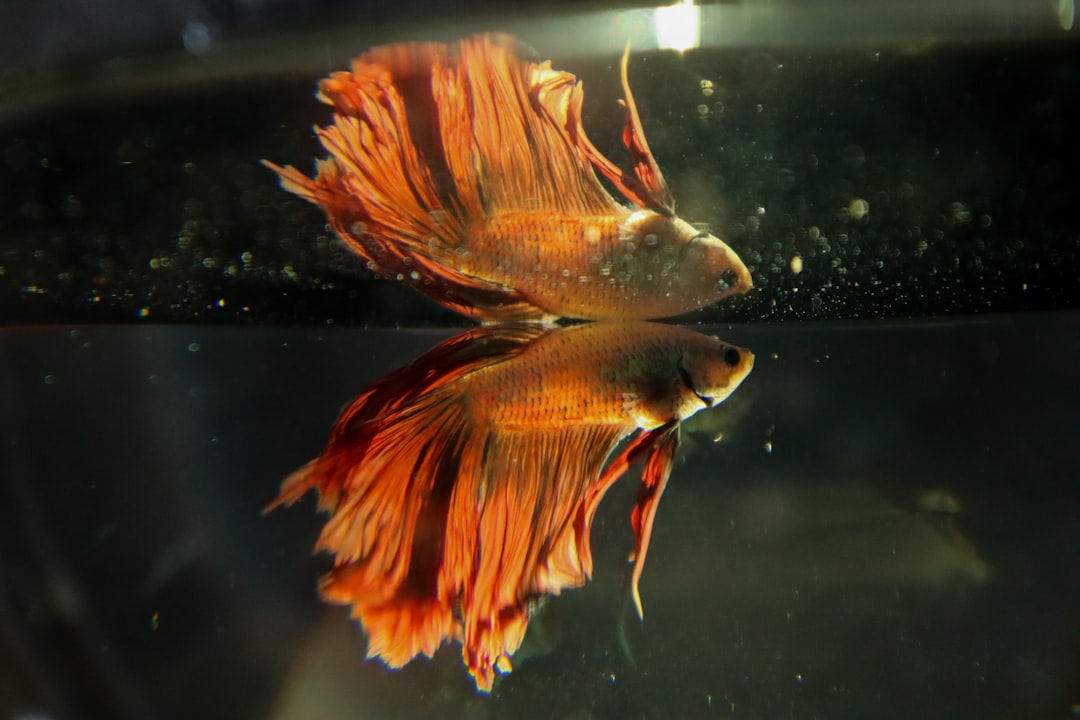
By day eighteen, the fins had regrown approximately 40 percent of their original length. The white edges were gone. The inflammation had disappeared. The betta swam freely, displaying its full finnage for the first time since its arrival, and the translucent new growth caught the light in a way that the old, scarred tissue never had.
The mistake most treatments share is that they assume the problem is the bacteria. The real problem is the environment. A fish that lives in water that stresses its immune system will keep getting sick, no matter how many antibiotics are poured into the tank. The leaf did not cure the betta — it created the conditions under which the betta could cure itself.
That distinction matters. It’s the difference between treating a symptom and removing the cause. Fin rot is not a disease that attacks a healthy fish; it’s an infection that takes hold when a fish’s immune system is already compromised. The white edges and fraying tissue are the result, not the root. Fix the root, and the result takes care of itself.
“People spend hundreds on medications,” Tran says. “They buy brands they can’t pronounce from companies that don’t tell you what’s in the bottle. Meanwhile, the thing that actually works is falling off a tree in their backyard. They just don’t trust it because it’s too simple.”
The betta that arrived in a bag on a Tuesday afternoon is still alive, six months later. Its fins are fully regrown, though the new tissue is slightly paler than the original — a faint scar that reminds the keeper of the moment they almost gave up. The tank it lives in now has Indian almond leaves as a permanent fixture, replaced every two weeks, the water a steady shade of amber. No fin rot has returned.
📷 Photos: B Y G (Unsplash), B Y G (Unsplash)