The Driftwood Arrived on a Tuesday
The Driftwood Arrived on a Tuesday
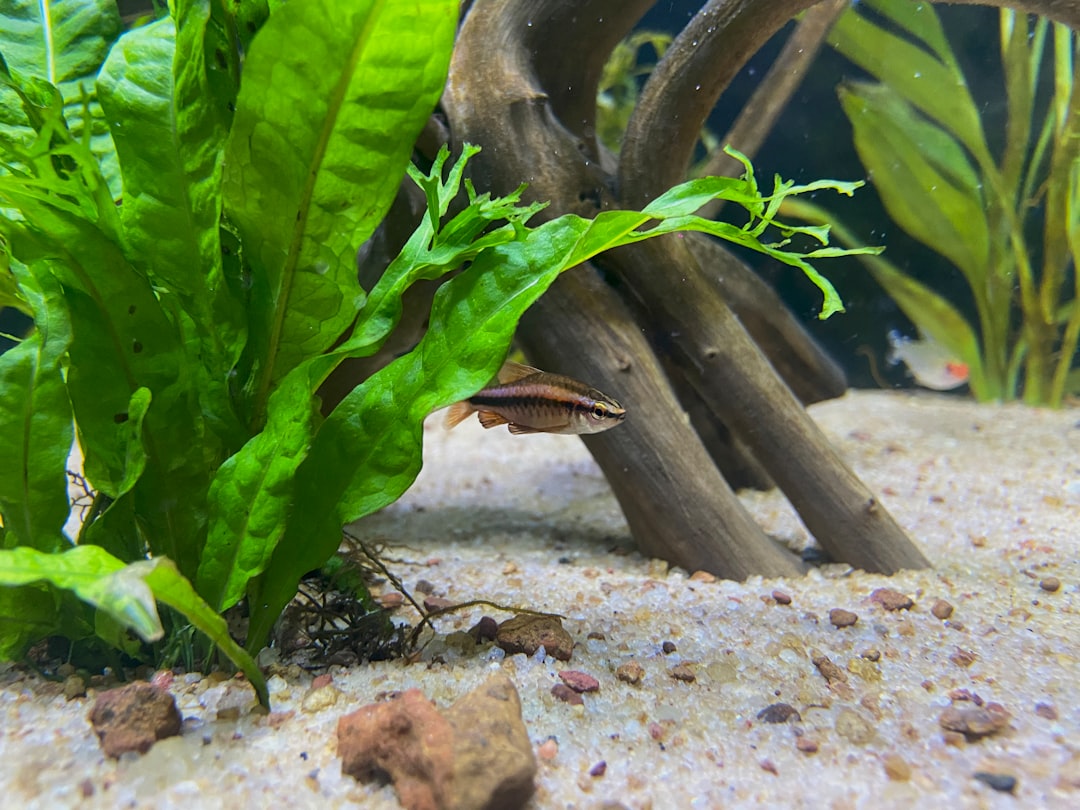
The package came in a plain cardboard box, unremarkable except for the faint, damp smell that escaped when the tape was cut. Inside, wrapped in wet newspaper, was a piece of Malaysian driftwood—curved, gnarly, the color of old tea. The man at the aquarium shop, a lanky fellow who always smelled faintly of fish food, had recommended it. “Your tank needs structure,” he’d said. “Something for the fish to move around, to feel like there’s a reason to explore.” That made sense at the time.
The driftwood was boiled twice before it went in—once for an hour, then again the next day, to pull out as much tannin as possible. It still stained the water a pale amber, but the shopkeeper had warned that was normal. “Give it a week, it’ll clear.” The water did clear, eventually. But something else changed.
The neon tetras stopped schooling.
For months before the driftwood, they’d moved as a single, shimmering unit—a blue-and-red ribbon that pulsed through the tank’s open water, turning in unison, never more than a fin-length apart. After the driftwood, they didn’t. They drifted. Some hovered near the wood’s shadow. Others hung by the filter outflow. Two took up station behind the heater. They weren’t stressed, not exactly—no clamped fins, no faded colors—but the ribbon was gone. The school had dissolved into a collection of individual fish sharing a piece of glass.
What the Books Don’t Tell You
Most guides on Paracheirodon innesi emphasize water parameters. Hardness, pH, temperature, nitrates. Schooling behavior is presented as a given—something the fish do if the numbers are right. The standard advice runs something like: keep them in groups of six or more, give them open water, keep the current moderate, and they’ll school.
The tank met every one of those conditions. The group was fifteen fish strong. The water was soft and slightly acidic, as recommended. The temperature sat at a steady 24°C. The tank was 90 centimeters long, with a broad open swimming area along the front glass. By all textbook logic, the tetras should have been weaving in formation.
Instead, they were spread out like a deck of cards thrown on a table.
The internet forums offered conflicting theories. One thread blamed the driftwood’s shape—too many hiding spots, too many visual barriers, encouraging the fish to break into smaller groups. Another said the tannins themselves might be the culprit, shifting the water’s chemistry just enough to dull the fish’s lateral-line sensitivity. A third, more puzzling suggestion: maybe the driftwood had introduced a scent or a compound from its bark that the fish found unsettling.
None of these felt right after observation. The tannins were mild. The driftwood was a single piece, not a tangled thicket. And the fish weren’t hiding; they were just… separate.
A Detail About Light
What the forums hadn’t discussed was the lighting. The tank ran a single LED strip, standard issue, positioned at the center of the hood. Before the driftwood, that light had fallen evenly across an open, empty tank—bright, uniform, with no shadows to speak of. The driftwood changed that. Its broad, flat surface cast a long shadow that shifted throughout the day as the light angle changed. A shadow that, from the tetras’ perspective, might have felt like cover.
It wasn’t the wood itself, maybe. It was what the wood did to the light.
One afternoon, watching the tank during a pause in work, it became clear: the fish weren’t avoiding the driftwood. They were using it. Each tetra had picked a spot—a shadow, a branch fork, a spot where the wood met the substrate—and treated it as a personal station. The school hadn’t broken up because the fish were scared. It had broken up because the driftwood gave them options. Options they hadn’t had before.
The Week of Dead Trout
There’s a term in the hobby: “dead trout syndrome.” It describes the peculiar stillness of fish in an over-structured tank—fish that look healthy but behave as if they’re waiting. No exploratory behavior, no flowing movement, just a kind of suspended animation. Some experienced aquarists argue it’s the result of offering too many hiding places in a tank that’s already small. The fish don’t feel the need to move because every inch is already accounted for.
The tetras, in their new, scattered arrangement, weren’t quite in that state. They moved. They fed normally. But they’d lost the one behavior that made them interesting to watch: the collective.
A post on a regional aquarium forum, dated three years back, raised a point that stuck. The writer—someone who went by “Sulawesi_Steve”—described removing a piece of bogwood from his tank after noticing his rummy-nose tetras had stopped schooling. “They’d been perfect for months,” he wrote. “As soon as the wood went in, they started treating the tank like a subdivided apartment building. Took the wood out, and they were back to normal within two days.”
The replies were mixed. Some agreed. Others accused him of anthropomorphizing. A few pointed out that rummy-noses are more sensitive to environmental change than neons, so the comparison might not hold.
But there it was: a single datapoint suggesting that sometimes, the fix was removal.
That felt like giving up. The driftwood looked good. It had cost $28. And the shopkeeper had been right—the tank did feel more complete with it. The problem wasn’t the wood. The problem was that the wood and the fish wanted different things from the space.
The Shadow Line Experiment
The solution arrived from an unexpected direction: a video about reef tanks, not freshwater. A marine aquarist was explaining how certain species of damselfish use light gradients to orient themselves, and how breaking up the tank’s light field can disrupt natural schooling behavior in fish that depend on visual cues from their neighbors.
Schooling, it turns out, isn’t just instinct. It’s a response to several simultaneous inputs: lateral-line pressure from neighboring fish, visual alignment cues, and the absence of visual breaks that make the fish feel isolated. A fish that can see its entire school in one glance is likely to stay with the group. A fish that can’t—because a shadow or a structure blocks part of its field of view—may drift off, simply because the school has momentarily “disappeared” from its perspective.
The driftwood wasn’t scaring the tetras. It was fragmenting their visual field.
The fix, when it came, was neither dramatic nor expensive. A second light strip was added to the tank’s front edge, angled slightly forward to eliminate the shadow cast by the driftwood. The intent was to flood the driftwood’s underside with enough light that the fish on either side could still see each other, even when the wood was between them.
It worked. Not immediately—it took about four days for the tetras to settle into the new lighting. But gradually, the individual stations were abandoned. The two fish behind the heater drifted out. The pair near the outflow rejoined the center. By the end of the week, the ribbon was back: fifteen neons moving as one, passing through the driftwood’s branches without breaking formation, as if the wood had always been there.
The shadow wasn’t gone. But it was no longer a barrier.
What Actually Changed
The tank looks better now than it did before—the driftwood gives it depth, and the schooling behavior gives it motion. But the experience left behind a question that’s hard to shake: how many other problems in a planted tank are really problems of perception? Not only the fish’s perception. The aquarist’s, too.
It’s easy to see a behavior change and assume it means stress, illness, or some water-quality failure. The forums encourage that kind of thinking—everything must have a cause, and the cause must be fixable. But sometimes the fish are fine. They’re just living differently, responding to a change that feels like a small thing to a human but looks like a wall to a 2-centimeter fish.
The driftwood stays. The second light strip is a permanent addition now, clamped to the rim with a small bracket that cost $6 from a hardware store. The tetras school right through the wood’s branches, sometimes splitting briefly around a fork before reuniting on the other side. It looks intentional, almost choreographed.
One afternoon, about a month after everything settled, a friend came over and watched the tank for a while. “They look happy,” she said.
Maybe they are. Maybe they’re not. Hard to tell with fish. But the ribbon moves the way it used to, and that’s enough to answer the question that started the whole thing.
📷 Photos: Indula Chanaka (Unsplash), Alizea Sidorov (Unsplash)