The Discus Hovered Near the Surface
The Discus Hovered Near the Surface
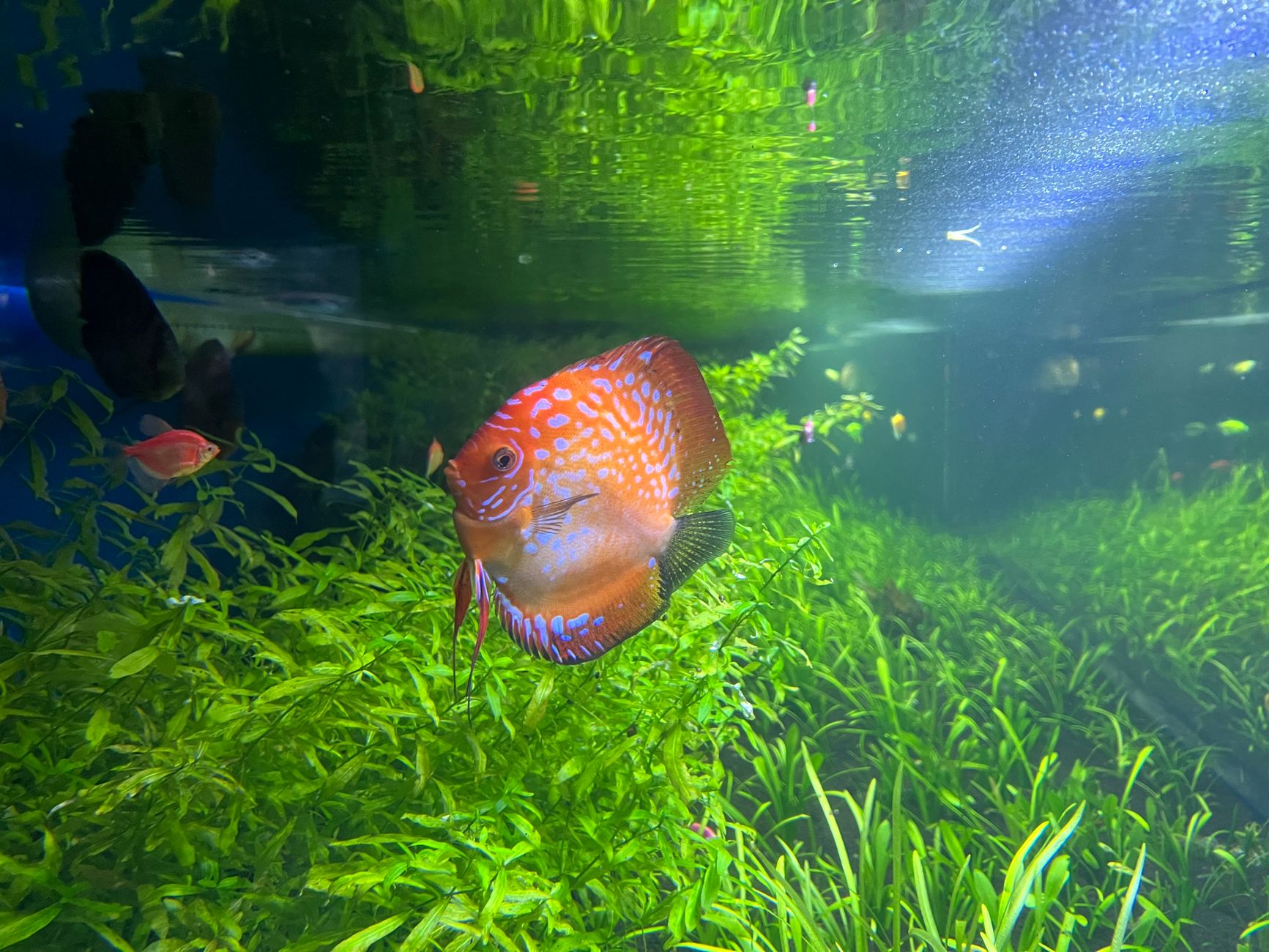
The first sign was a single discus hanging near the surface at the back of the tank, its body darkening as if a shadow had settled beneath the skin. The second sign came four days later: a thin, stringy strand of white feces trailing from the same fish like a loose thread. By the end of that week, three others had begun spitting food. The diagnosis was Hexamita — a protozoan infection that, in discus, can escalate from a quiet worry to a tank-wide crisis inside two weeks.
Hexamita is not a death sentence, but it behaves like one when treated incorrectly. The mistake most aquarists make — and the one that cost a keeper in Bangkok roughly 2,000 baht in dead fish before they got it right — is treating the water instead of the fish.
What that white, stringy feces actually means
Hexamita is a flagellate protozoan that colonizes the intestinal tract and gallbladder. It appears most often in discus that are stressed: a recent shipment, a temperature swing, overcrowding, or poor water quality. The parasite itself exists at low levels in many aquariums without causing problems. It only becomes pathogenic when the fish’s immune system drops.
The white, stringy feces — often called “white stringy poop” in the forums — is the most reliable visual indicator. A discus with Hexamita will usually stop eating within a day or two of that symptom appearing. The fish may also clamp its fins, darken in color, and hover near the surface or in corners.
A common error is mistaking this for a bacterial infection and throwing general antibiotics at the tank. That approach kills the fish’s gut flora, makes the Hexamita worse, and leaves the aquarist out the cost of the medication and whatever fish succumb during the treatment window.
Isolate before the tank becomes the pharmacy
A quarantine tank is not optional for Hexamita treatment. Treating the entire display tank means medicating fish that aren’t sick, disrupting the biological filter, and creating a treatment-resistant environment. A 20-gallon quarantine tank, bare-bottomed, with a sponge filter and a heater set to 86°F, is adequate for four adult discus.
The temperature matters. Hexamita thrives in cooler water. Raising the quarantine tank to 88–90°F during treatment speeds the parasite’s life cycle and makes it more vulnerable to medication. A keeper in Jakarta found this out the hard way, keeping their hospital tank at 82°F for a week with no improvement, then raising it two degrees and seeing visible change within 48 hours.
Metronidazole, not a shotgun approach
Metronidazole is the standard treatment for Hexamita. It’s an antiprotozoal that works by inhibiting the parasite’s ability to metabolize. It comes in tablet form for aquarium use (often sold as Flagyl or generic metronidazole) and in powder form.
The correct dosage is 250 mg per 10 gallons of water, repeated every 24 hours for three days. After the third dose, do a 50 percent water change and observe. Most discus will begin eating again by day four or five.
A less common but effective alternative is dimetridazole, which some keepers report working faster. It’s harder to find and less studied in the aquarium hobby, but a discus breeder in Singapore has used it exclusively for six years, dosing at 100 mg per 10 gallons for three days. The trade-off is availability: metronidazole is stocked at most major aquarium retailers; dimetridazole usually must be ordered online.
Feed the medication, don’t dump it in the water
This is the detail that separates effective treatment from the kind that wastes a bottle of medication. Metronidazole is poorly absorbed through the water column. Most of it degrades before reaching the fish. The effective route is oral: the medication must get into the fish’s gut.
The method is simple but requires careful timing. Mix the powdered metronidazole with a binding food — minced beef heart, frozen bloodworms, or a high-protein discus pellet soaked until soft. Use enough medication to make the food visibly coated but not caked. Feed this medicated food twice daily for three days.
A discus that has already stopped eating presents the real challenge. In that case, a bath treatment becomes the fallback. Dissolve 400 mg of metronidazole per 10 gallons of water in the quarantine tank and perform a full-course water change and redose every 24 hours. It’s less effective than oral dosing but better than doing nothing.
After the three-day course, the real work begins
After the three-day treatment course, move the fish back to the display tank only if they are eating actively and producing normal feces for at least 48 hours. The quarantine tank should be broken down and sterilized with bleach (one part bleach to nine parts water) before reuse.
During recovery, keep the display tank temperature at 84–86°F and perform daily water changes of 20 percent. Add a probiotic supplement designed for aquarium use — several are available from Japanese and German manufacturers — to help restore gut flora. A discus that has been through Hexamita treatment often has a compromised digestive system for another two weeks.
One detail that surprised a keeper in Kuala Lumpur: after treatment, the fish’s appetite returned ravenously. They fed cautiously — small portions, three times a day — and still saw the fish bloat slightly. It took a week of careful feeding before the discus looked normal again. Bloating after Hexamita treatment is common and usually resolves on its own if feeding is kept moderate.
The pH had drifted from 6.5 to 5.8
Hexamita comes back if the underlying stress isn’t addressed. The fish that first showed symptoms in this article’s opening scene came from a tank where the pH had drifted from 6.5 to 5.8 over a month, the result of a neglected CO2 system. Correcting the pH swing and stabilizing it at 6.2–6.5 was what kept the disease from returning, not the medication itself.
Regular maintenance, stable parameters, and quarantining new fish for at least four weeks before introduction are the only reliable prevention. No medication replaces consistent water changes and a properly cycled filter. Most who’ve treated Hexamita say they’d do at least one part of it differently next time: dose through food from the start, quarantine faster, and raise the temperature before reaching for a bottle of anything.
📷 Photos: Anurag Gusain (Pexels), Pixabay (Pexels)