The One That Almost Didn’t Fit
The One That Almost Didn’t Fit
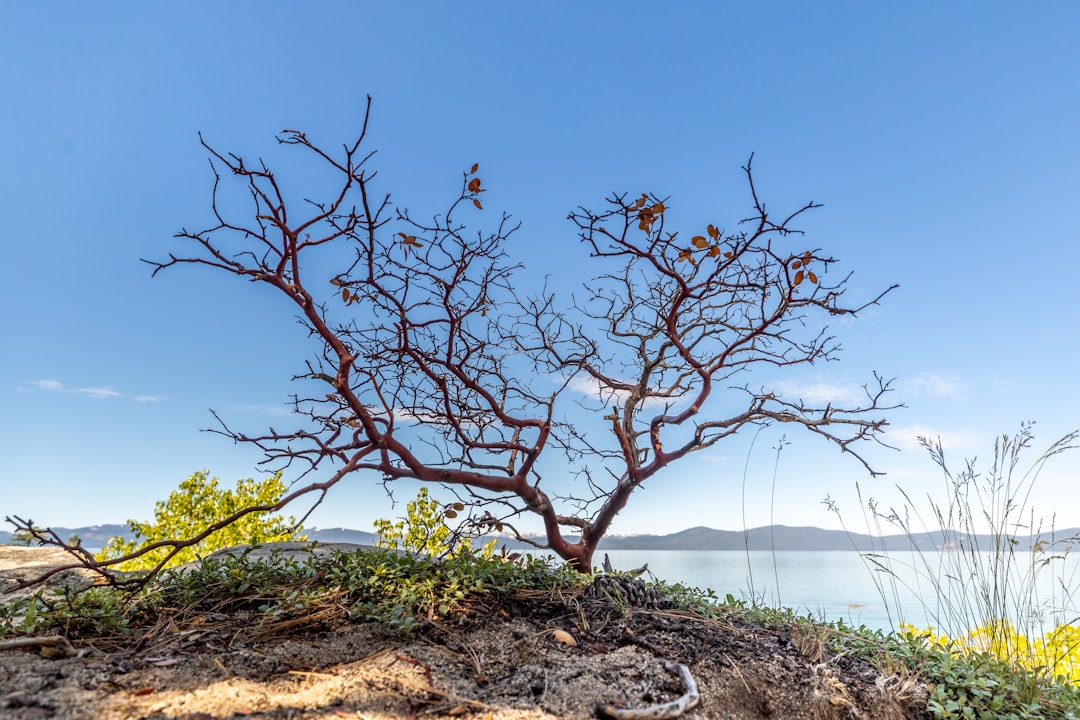
The piece of manzanita arrived in a box that looked like it had been dropped from a loading dock. The cardboard was crushed at one corner, and when Leo Tan pulled the driftwood out, a small cloud of bark dust settled on his dining table. It was a single branch, maybe fourteen inches long, with a twist near the base that made it look like a question mark.
He had ordered it for a 10-gallon tank, the ADA 45cm cube that had been sitting empty on his desk for three months. The plan was simple: one piece of wood, one type of moss, one kind of fish. Minimalist. The kind of scape that looks easy until you try it.
The wood didn’t fit.
Not even close. Leo had measured the tank diagonally — 21 inches — and the branch was 19 inches at its longest axis. But wood is not a straight line, and manzanita in particular has a habit of occupying more space than its length suggests. The branch wanted to rest at an angle that would have pushed the front glass by about an inch and a half. He rotated it. Tried the other side. Held it underwater in the kitchen sink to see if it would soften enough to bend. It did not.
“That’s when you learn the difference between a sketch and a tank,” said Maya Ventura, who runs a small aquascaping supply shop in Singapore called Submerged. She had sold Leo the manzanita three days earlier. “People see these single-branch scapes online and think, ‘I’ll just buy one piece and put it in.’ But manzanita has a shape that fights back. You can’t force it into a composition the way you can with spider wood or mopani. It decides where it goes.”
The Kitchen That Smelled Like Rain-Soaked Campfire
Leo had read the forums. Everyone says to boil driftwood for at least two hours to release tannins and kill anything living in the bark. He boiled it for three. The water turned the color of strong black tea. He changed the water, boiled it again. Another hour. By the end, the steam smelled like wet ash and bark.
What no one mentioned: manzanita is dense. The wood sinks almost immediately, which is usually a good thing — no need to weight it down with rocks for weeks while it waterlogs. But the density also means that boiling doesn’t penetrate as deeply as it does with softer woods. The tannins keep leaching, just slower. Leo’s tank, when he finally set it up, ran tea-colored for the first ten days despite the four-hour boil.
The tank itself was a 45cm cube with a small internal filter — an Eheim 2211 that Leo had bought used from a hobbyist who was upgrading. It was rated for tanks up to 30 gallons, which was overkill for 10 gallons, but the flow was adjustable. He set it low. The wood went in first, placed at a 30-degree angle from the back left corner, pointing toward the front right. Then a thin layer of Amazonia soil — maybe two liters — capped with fine white sand. Then the moss.
Fissidens fontanus, mostly. A few small patches of weeping moss on the lower branches. Leo had ordered it from a seller on Shopee who promised “aquatic grown” but the moss arrived looking like it had been harvested from someone’s backyard and shipped wet. Half of it melted within a week.
The Three-Gallon Water Change
This became the ritual. Every other day for two weeks, Leo siphoned out three gallons and refilled with tap water treated with Seachem Prime. The tannins faded gradually. By day twelve, the water was almost clear, with just a faint amber tint that caught the light in a way Leo decided he liked. He stopped changing water.
The tank cycled unevenly. Ammonia spiked to 2 ppm on day six, then dropped. Nitrites showed up on day nine and lingered at 1 ppm for almost a week. Leo tested every other day with the API master kit, the one with the test tubes that never quite line up right. The nitrites finally zeroed out on day eighteen. By then, the moss that had survived was beginning to grow — tiny green tips emerging from the brown patches.
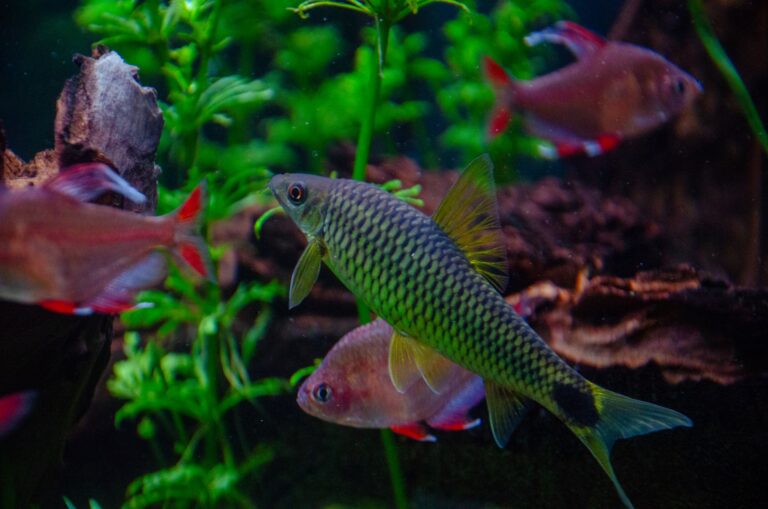
He added the fish on day twenty-one: eight chili rasboras, each about the size of a fingernail clipping. They were supposed to school, but in a tank this small with one dominant piece of wood, they mostly drifted in pairs, weaving through the branches. The manzanita created a kind of tunnel effect — the main branch arced over the center, and the smaller branches split off lower, forming a canopy that the fish used as cover. For the first time, the tank looked like something intentional.
The Hardest Easy Scape
Danielle Kwan, who judged the IAPLC competition’s small tank category in 2023, once described the single-branch approach as “the hardest easy scape.” It’s a phrase that stuck with Leo after he read it in a forum post. The idea is that a single piece of wood carries the entire visual weight of the composition. There’s nothing to hide behind. No rock pile to distract the eye, no second branch to balance the asymmetry. The wood has to be interesting from every angle, and it has to work with the negative space around it.
“Most people overcomplicate small tanks,” Kwan said in an interview posted on an aquascaping blog. “They try to cram in three types of hardscape and four plants and end up with a mess that looks like a yard sale. With a 10-gallon, you have maybe one or two strong elements. Anything more and the tank feels claustrophobic.”
Leo’s tank was not claustrophobic. The manzanita occupied about 40 percent of the internal volume — less than he expected, but more than he intended. The space behind the wood, where the filter sat, was barely visible. The space in front was open sand, which the rasboras used for darting back and forth during feeding. The moss was filling in slowly, covering the upper branches in a way that looked natural rather than applied.
But the single-branch scape has a weakness: if the wood isn’t interesting, the whole tank fails. Leo got lucky. His piece had a knot near the top that created a small hollow, and a branchlet that split at an almost perfect 90-degree angle, giving the scape a horizontal line that broke up the verticality. It looked planned. It wasn’t.
The Weep at the Front Right Corner
On day thirty-four, Leo noticed a small puddle on the desk. The tank was sitting on a leveling mat — one of those black foam pads that are supposed to distribute weight evenly — and the mat was wet at the front edge. He wiped it dry, waited. The puddle returned within an hour.
The leak was coming from the bottom seam, front right corner. A slow weep, maybe a drop every two minutes, but enough to soak through the mat and pool on the desk surface. Leo’s first thought was that he’d cracked the glass while adjusting the wood — manzanita is heavy, and he had wedged it in place with some force. But the glass was intact. The silicone seam was the problem.
The ADA 45cm cube was not new. Leo had bought it secondhand from a guy who was breaking down his shrimp tank. The seller had assured him it was “solid.” The silicone around the bottom edge was slightly yellowed, which Leo had noticed but dismissed. Now it was leaking.
He drained the tank into a bucket. Caught the rasboras with a net — all eight, somehow — and put them in a plastic container with the tank’s filter media and a small airstone. Then he dried the bottom edge with a paper towel and applied a bead of GE Silicone I across the entire seam, pressing it into the gap with his finger. It was the kind of fix that might hold for a month or might hold for five years.
He let it cure for 48 hours. Tested it by filling the tank halfway and leaving it overnight on a towel. No more puddles. The fish went back in. The moss, which had been sitting in a damp plastic bag for two days, looked a little pale but recovered within a week.
The Cloud
But the silicone job had disturbed the sand layer, and when Leo refilled the tank, a plume of fine white sediment clouded the water. It took the filter two days to clear it. The rasboras stayed near the wood, their colors washed out in the murky water. Leo thought about tearing the whole thing down and starting over. He didn’t. He waited.
On day forty, the water was clear again. The moss had grown enough to cover the silicone patch on the back of the wood, where he had glued a small piece to fill a gap. The rasboras were schooling — a loose, shifting group that moved through the branches like they owned the place. The tank looked good. Not great, but good.
White Sand That Showed Every Speck
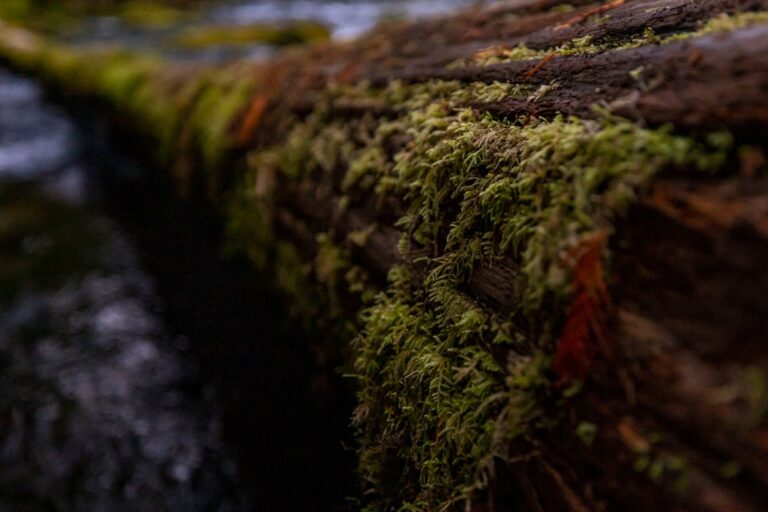
The manzanita held up. After the initial tannin flush, it stopped leaching altogether. The bark stayed intact, no peeling or rot. The moss attached easily to the rough surface — Fissidens in particular seems to love manzanita’s texture. By month two, the wood had developed a faint green patina where the light hit it, which Leo liked more than he expected.
What didn’t work: the white sand. It showed every speck of waste, every fallen leaf from the moss, every piece of uneaten food. Leo spent five minutes every morning with a turkey baster, spot-cleaning the sand. He switched to a finer-grained substrate within three months — a mix of ADA La Plata and some leftover Amazonia — and the tank looked better immediately. The contrast between the dark soil and the pale wood was stronger, more deliberate.
The rasboras bred. Or at least, one of them did. Leo found a single fry swimming near the surface about six weeks in, too small to identify. It disappeared a few days later, probably eaten. But the fact that it happened at all suggested the tank was stable enough to support life, even if that life was short.
Would it be worth doing again? Most who’ve tried it say yes — and that they’d do at least one part of it differently next time. For Leo, that part was the wood selection. He would have gone to a physical shop, held the piece in his hands, measured it against the tank’s actual dimensions rather than trusting a diagonal calculation. He would have passed on the used tank, or at least resealed it before setting it up. He would have accepted the tannins from the start and let them fade on their own schedule, saving himself eighteen water changes and a lot of Prime.
The manzanita is still in the tank. It has been there for eleven months now, and the moss has grown thick enough that the branch structure is almost obscured in places. Leo has thought about trimming it back, but he hasn’t. The wood underneath is still the thing that holds the scape together, even when you can barely see it.
📷 Photos: Leo_Visions (Unsplash), Leo_Visions (Unsplash)