Live Blackworms for Breeding German Blue Rams: Your Complete Guide to a Game-Changing Food
Live Blackworms for Breeding German Blue Rams: Your Complete Guide to a Game-Changing Food
You’ve spent months perfecting your German Blue Ram setup—soft, acidic water, a carefully planted tank, and a bonded pair that dances together like professionals. But if you’re struggling to get them to actually spawn, or worse, watching them eat their own eggs, the missing piece might be sitting in your refrigerator right now. Live blackworms are the go-to conditioning food for serious ram breeders, and for good reason. “Live blackworms are essentially nature’s multivitamin for cichlids,” says David Chen, a freshwater aquatics specialist. “When you’re trying to bring a pair of German Blue Rams into breeding condition, nothing else comes close to triggering that hormonal response and providing the protein density they need.”
This article walks you through everything you need to know: where to source them, how to keep them alive, how often to feed, and—most importantly—how to use them to turn your pair from reluctant roommates into proud parents.
The Nutritional Edge
German Blue Rams are micropredators by nature. In the wild, they spend their days picking tiny invertebrates out of leaf litter and sand. Live blackworms—small, wriggling oligochaetes—mirror that natural diet almost perfectly. “The key isn’t just the protein content, which is high, but the specific amino acid profile and the moisture content,” explains an aquaculturist who specializes in South American dwarf cichlids. “Dry pellets can cause constipation in rams, especially when they’re loading up for spawning. Live blackworms are about 85 percent water, so they digest easily and quickly, leaving your fish ready to produce eggs and milt without digestive stress.”
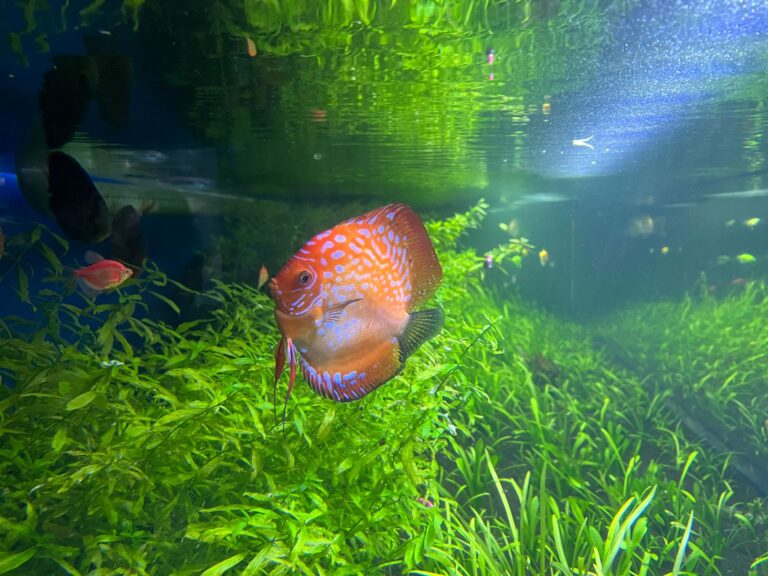
You’ll notice a difference within a week of introducing them. Your female ram will begin to fill out in the belly, turning a deeper, richer orange. The male’s dorsal fin will extend, and his colors will intensify to a neon blue. The vent area becomes the tell: within five to seven days of a consistent blackworm diet, the female’s ovipositor becomes more prominent—that’s the signal that she’s approaching breeding condition.
The Behavioral Trigger
There’s also a behavioral element you can’t replicate with frozen foods. Live blackworms trigger the rams’ natural hunting instincts, which in turn stimulates courtship and territorial behavior. “When you drop a clump of blackworms into the tank, the pair will often cooperate to hunt them,” Chen says. “They’ll work together, herding the worms into a corner, and that cooperative feeding reinforces their bond. I’ve seen pairs that were barely tolerating each other become inseparable after two weeks of live blackworm feedings.”
Target-feed the female directly by using a turkey baster or long pipette to deposit the worms right in front of her—a technique some keepers call “the bridal suite treatment.” Drop the worms near her preferred spot, and watch the male respond by guarding her while she eats.
Sourcing and Handling Live Blackworms
Where to Buy
Your local fish store may stock live blackworms, but they’re not as common as brine shrimp or bloodworms. Call ahead and ask if they get weekly shipments. If they don’t, you’re better off ordering online from a dedicated blackworm supplier. The worms need to be fresh—if they arrive gray or mushy, don’t even open the bag.
You’ll typically buy blackworms by the ounce or quarter-pound. For a single pair of rams, a quarter-pound will last you about two weeks if stored properly. Don’t over-order just because the shipping is flat-rate—these are living animals, and if you can’t feed them within 10 to 14 days, you’re wasting money.
Storage: The Cold Water Rule
Once your blackworms arrive, keep them cold—but not freezing. Place them in a shallow container with just enough dechlorinated water to cover them. Then put that container in the refrigerator, ideally at 38 to 42 degrees Fahrenheit. Change the water daily, and pick out any dead worms or brown slime. They can last two to three weeks this way.
Rinse them before feeding. Blackworms are often packed in their own waste, and dumping that into your breeding tank can spike ammonia. A simple rinse in a fine mesh strainer under cold tap water, followed by a quick dip in dechlorinated water, keeps the worms clean and the water quality high.
Feeding Your Pair: Frequency and Technique
The Pre-Spawn Boost
When actively conditioning a pair for breeding, feed live blackworms twice a day—once in the morning and once in the evening. “Feed only what they can consume in about two minutes,” Chen emphasizes. “Overfeeding blackworms is the number one mistake I see. Leftover worms will burrow into your substrate and die, rotting and fouling your water. You’re trying to create pristine conditions for spawning, not a compost pile.”
A good rule of thumb is about 10 to 15 worms per feeding for a bonded pair. If you see worms still wriggling on the substrate after three minutes, you’ve given too many. Reduce the portion size next time—your fish will let you know when they’re satisfied by stopping their active hunting and hovering near their chosen spawning site.
Post-Spawn Considerations
Once your pair has laid eggs—typically on a flat rock or a broad leaf—resist the urge to keep feeding heavily. After the eggs are laid, reduce blackworm feedings to once daily, and feed very sparingly. The parents will focus on fanning and guarding the eggs, not eating. Leftover worms can attract fungus or planaria, which will attack the eggs—entire clutches can be wiped out by an overfed tank.
You can resume normal feeding once the fry are free-swimming—about five days after hatching, depending on temperature. At that point, the parents will begin leading the fry to food, and live blackworms are an excellent size-graduated food for the adults to feed to their young. Crush a few worms against the glass with your finger; the fry will swarm to the tiny pieces, and the parents will help chop up the larger ones.
Potential Pitfalls and How to Avoid Them
Water Quality Management
Live blackworms are high-protein, and that means they produce ammonia as waste. Even if your fish eat every worm you offer, the metabolic byproducts will stress your biofilter. Increase your water change schedule when feeding live blackworms—20 to 30 percent water changes every other day during the conditioning phase. Test your ammonia and nitrite daily; if either reads above zero, you’re feeding too much or not changing enough water.
You can also help your filter by adding a small sponge filter to the breeding tank. It provides extra biological filtration and gentle water movement, which blackworms—and ram eggs—both appreciate. A sponge filter will catch any stray worms and give your beneficial bacteria a surface to colonize.
Disease Introduction
Any live food carries a risk of introducing pathogens, and blackworms are no exception. They can harbor bacteria, protozoans, or even small parasites. Quarantine your blackworms before feeding them to your breeding pair—place them in a separate container with water and a drop of methylene blue for 24 hours. It’s a gentle antiseptic that kills most surface pathogens without harming the worms. Rinse them thoroughly before feeding.
Source from reputable suppliers who prioritize cleanliness. Ask your supplier how they maintain their worm cultures; if they can’t describe their water change and sanitation protocols, find another source.
Alternatives and Complementary Foods
Frozen vs. Live
Live blackworms are the gold standard, but they’re not always practical. If you’re traveling or your supplier runs out, frozen blackworms are a suitable backup. Frozen blackworms retain most of the protein and amino acids, but they lose the behavioral benefit—your fish won’t hunt them, so you won’t get the same bonding response. Use frozen for maintenance feeding, but switch back to live when you’re serious about conditioning for a spawn.
You can also supplement with high-quality pellets or flakes specifically formulated for dwarf cichlids. Look for ingredients like krill meal, spirulina, and salmon oil, but never make pellets the primary food during breeding season. Rams are built to process live food—their digestive tracts are short and designed for high-moisture, high-protein meals.
Other Live Foods to Rotate
Blackworms shouldn’t be the only live food in your rams’ diet. Rotating in baby brine shrimp or daphnia once or twice a week gives them a broader nutrient profile. Brine shrimp are excellent for conditioning females, and daphnia act as a natural laxative, preventing the constipation that can occur with a purely worm-based diet.
You can culture both at home with minimal equipment—a simple jar with a light and some yeast can produce a steady supply of daphnia. It’s a low-cost way to ensure your rams always have variety.
At the end of the day, feeding live blackworms to your German Blue Rams is one of the most effective ways to unlock their breeding potential. You’re giving them a food that mirrors what they evolved to eat, delivered in a way that engages their natural instincts. It takes a little extra effort—rinsing, storing, water changes—but the payoff is watching your pair produce clutch after clutch of healthy, vibrant fry. As Chen puts it, “Live blackworms aren’t just food. They’re the bridge between keeping rams alive and getting them to truly thrive.”
📷 Photos: Wolfgang Weiser (Unsplash), Erwin Bosman (Unsplash)