Why Your Java Fern Melted After Root Tabs (And What to Do Instead)
Why Your Java Fern Melted After Root Tabs (And What to Do Instead)
The first sign of trouble wasn’t dramatic. It never is. One morning, the Java Ferns that had been anchored to a piece of driftwood for three months looked slightly translucent along the edges — the way a leaf looks when it’s been pressed against a window for too long. By the following week, the older leaves had turned into brown, gelatinous ribbons. The rhizomes, the thick horizontal stems that should feel firm and green, were soft in a way that suggested rot rather than recovery.
The aquarium owner had done what seemed logical: added root tabs near the Java Ferns, pushed them into the gravel around the base, assuming that if liquid fertilizer was good, concentrated tabs pushed straight into the substrate would be better. That assumption cost roughly 35 ringgit in root tabs and, more importantly, three months of plant growth.
The mistake is common enough that Yusuf, who runs a planted tank supply shop in Petaling Jaya, says he sees versions of it at least twice a month. “People treat all plants the same,” he says, gesturing at a display tank where a massive Java Fern colony spreads across a piece of manzanita wood, its roots gripping the surface like fingers. “They see a deficiency — yellow leaves, holes — and reach for the strongest thing they have. But Java Fern doesn’t feed through its roots the way other plants do.”
The Rhizome Sits Above the Gravel
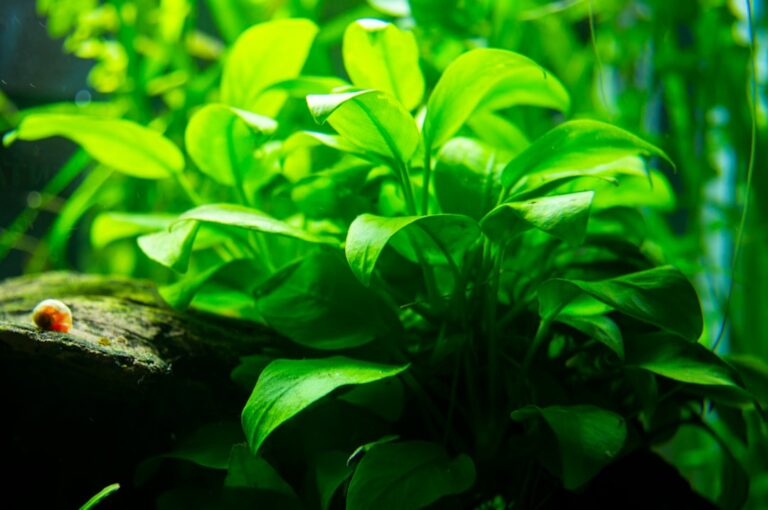
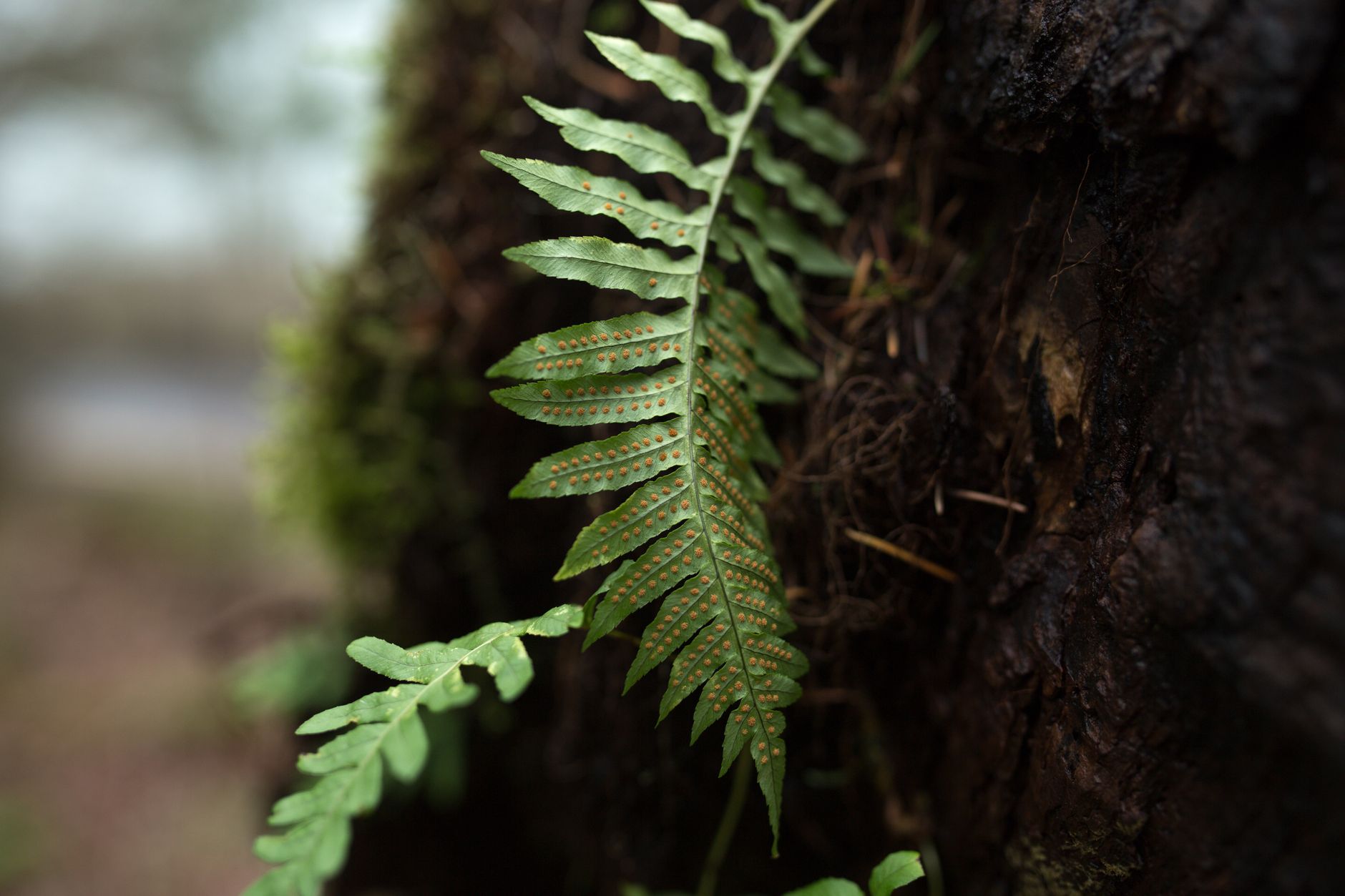
Java Fern (Microsorum pteropus) belongs to a category of plants that botanists call epiphytes. In the wild, it grows attached to rocks, tree roots, and submerged branches in slow-moving Southeast Asian streams. It does not grow in soil. Its rhizome — the horizontal stem that runners and leaves emerge from — sits above the substrate, exposed to open water. The fine brown threads that look like roots are primarily attachment structures, not feeding organs.
This is the biological detail that root tabs can’t work around. When root tabs are placed in the gravel, they release nutrients into the substrate itself — the pore space between sand or soil particles where traditional rooted plants extend their root systems. Java Fern’s rhizome, sitting on top of the gravel rather than buried in it, has no access to that nutrient zone. The plant’s actual feeding happens through its leaves, which absorb dissolved nutrients directly from the water column.
The trouble is that root tabs don’t stay contained. They leach. The concentrated fertilizers inside — typically NPK (nitrogen, phosphorus, potassium) plus trace elements — begin diffusing outward the moment they contact water. In a mature aquarium with a deep substrate, that diffusion happens slowly and mostly stays within the gravel. In a shallow setup or one with water flow near the substrate, the nutrients can enter the water column directly.
That’s where Java Fern, which has evolved to tolerate low-nutrient conditions, runs into trouble. A sudden spike in ammonia from the nitrogen component of a root tab can burn the leaves. An excess of phosphorus can trigger a different kind of die-off, one that looks like a deficiency but is actually toxicity. The plant, adapted for lean conditions, is overwhelmed by a feast it was never designed to handle.
Liquid Fertilizer, Dosed Into Open Water
Liquid fertilizers are dosed into the water column, where Java Fern’s leaves can access them directly. The concentration is diluted across the entire tank volume rather than concentrated in a single point. A standard dosing schedule — a few drops per 20 liters, once or twice a week — delivers a steady, low-level supply that matches what the plant would encounter in a slow-moving stream where nutrients are dilute but constantly renewed.
The difference becomes visible within two weeks of switching. New leaves emerge a brighter, more consistent green. The old melt stops spreading. The rhizome firms up.
One thing to note: Java Fern is not a heavy feeder. It grows slowly even under ideal conditions. A tank with a modest fish load — a few tetras or rasboras — produces enough fish waste to supply most of what Java Fern needs. Adding liquid fertilizer in this scenario is supplementary, not essential. The mistake is assuming that because some plants need heavy root feeding, all plants do.
Reading the Leaves Before Reaching for a Bottle
Before reaching for any fertilizer, look at the leaves. Java Fern communicates its needs through specific visual cues:
– Pale, translucent leaves with dark veins: likely a nitrogen deficiency. A small dose of liquid nitrogen supplement, or simply feeding the fish a bit more, usually corrects this within a week.
– Yellowing older leaves while new growth stays green: potassium deficiency. This is the most common deficiency in low-tech tanks. A liquid potassium supplement works well.
– Holes in leaves that start as small black spots: often a sign of excess phosphate or inconsistent CO2, not a deficiency at all.
– Leaves turning brown from the tips inward: the most common cause is the rhizome being buried. If the rhizome is below the substrate line, it will rot. Unbury it.
If none of these look familiar and the plant is simply not growing, the problem is probably light, not nutrition. Java Fern does well in low light — about 20 to 30 PAR at the mid-point of the tank. Too much light, especially combined with even moderate nutrients, triggers algae growth on the older leaves, which then suffocates them.
One Tank, Two Feeding Strategies
Yusuf does sell root tabs. He just doesn’t recommend them for Java Fern. But there is one scenario where they can be used in the same tank: when Java Fern shares a tank with heavy root-feeders like cryptocorynes, Amazon swords, or vallisineria. In that case, the root tabs go near the root-feeders, and Java Fern gets its nutrients from the water column via whatever liquid fertilizer is being dosed for the other plants.
The key is placement. Push the root tab deep into the gravel, at least five centimeters down, directly under the root-feeder’s crown. Water flow will still cause some diffusion into the water column, but the concentration at the Java Fern’s level will be low enough that the plant can handle it.
Cotton Thread and a Clean Slate
The tank in question had its Java Fern removed from the driftwood, the brown leaves trimmed off, and the healthy rhizomes cut into sections of about three to four leaves each. These were reattached to clean driftwood using cotton thread — a trick that takes less than a minute and prevents the plant from floating away until it grips the wood on its own.
The root tabs were removed from the gravel entirely. A liquid all-in-one fertilizer was dosed at half the manufacturer’s recommended rate for the first two weeks, then increased to the full rate after that.
Four weeks later, the new growth was unmistakable. Small green leaves emerging from nodes along the rhizome, glossy and firm. No melt. No algae. No translucent edges.
The cost of the lesson: 35 ringgit for root tabs that had to be removed, plus about 20 ringgit for a small bottle of liquid fertilizer. The alternative cost, if the owner had started with the right approach, would have been zero wasted tabs and no plant recovery time.
For anyone considering a planted tank with Java Fern, the advice from Yusuf is straightforward: “Read what the plant actually needs. Not what the bottle says.” The bottle says it works for all plants. The plant says otherwise.

📷 Photos: ArtHouse Studio (Pexels), Amanda Linn (Pexels)