
How I Accidentally Starved My Tank and What Actually Fixed It
How I Accidentally Starved My Tank and What Actually Fixed It
The bottle sat on my counter for three weeks before I opened it. Dr. Tim’s One and Only. I’d bought it at Petco for $12.99, wedged between a bottle of Stress Coat and a pack of filter cartridges I didn’t need. Every YouTube video, every forum post I’d read said the same thing: “Just pour it in and wait.” So I did.
I waited. And waited. My API test kit showed ammonia climbing to 4 ppm. Then 8 ppm. Then the nitrites showed up, a faint purple I’d never seen before on the color card. But they stopped there. The cycle stalled at nitrites for two solid weeks. My filter sponges turned brown. My Java ferns started melting at the tips. I was feeding the tank 4 ppm of liquid ammonia every morning like clockwork, checking the tests every evening. Nothing moved.
The problem wasn’t the bacteria. The problem was I assumed “beneficial bacteria supplement” meant I could skip understanding what was actually happening in the water column. That assumption cost me two weeks and $40 in bottled bacteria that I eventually dumped down the sink.
The Midnight Reading That Changed Everything
I called a guy named Kevin from a local reef club at 11 PM on a Tuesday. Found his number on a sticky note taped to the front door of my LFS. He answered on the third ring, sounded like he’d been up anyway. “What are you dosing?” he asked. I told him. “Okay, but what’s your pH?” I hadn’t checked. “Temperature?” I guessed 78. “That’s your problem,” he said. “Bacteria don’t move when they’re cold. They don’t eat. They just sit there.”
I pulled out my thermometer. The water was at 74 degrees. The bottle’s label had said 74-86°F in fine print. Kevin told me to bump it to 82 and wait three more days. I didn’t believe him. I did it anyway because I didn’t have a better plan. Three days later, the nitrites dropped to zero. The nitrates showed up, a cheerful orange on the test tube. The cycle finished in five more days.
That phone call rearranged how I thought about bottled bacteria entirely. They’re not magic. They’re dormant organisms that need certain conditions to wake up. The bottle is a starting line, not a finishing line.
Three Kinds of Bottles, Two Good Ones
There are roughly three types of bacteria supplements on the market, and nobody explains how they’re different. I learned this the hard way trying to cycle a 20-gallon long for cardinal tetras.
The first type is pure Nitrosomonas and Nitrobacter species. These are the standard workhorses. They convert ammonia to nitrite, then nitrite to nitrate. Dr. Tim’s, Stability, and FritzZyme TurboStart 900 all fall into this category. They work, but they’re sensitive to temperature, pH, and oxygen levels. If your water is cold or acidic, they won’t colonize fast enough to keep up with ammonia production.
The second type is a blend that includes heterotrophic bacteria. These are faster-growing but less specialized. They’ll consume ammonia and organic waste simultaneously. Tetra SafeStart uses this approach. The theory is that fast-growing heterotrophs establish a biofilm quickly, then the slower autotrophs take over later. In practice, I’ve had SafeStart work brilliantly in one tank and fail completely in another.
Third type is the newest stuff — nitrifying bacteria in a spore form. MicroBacter Start and similar products use bacterial strains that can survive drying and storage better than traditional species. They’re supposed to reactivate faster when added to water. I’ve used MicroBacter Start in a saltwater tank and had measurable nitrite oxidation within 48 hours, which was faster than anything else I’d tried. But it’s expensive. A four-ounce bottle runs $15 at my LFS and barely covers a 40-gallon tank.
The real secret that nobody tells you: none of these products work well if your tank doesn’t already have some form of biofilm established. The bacteria need something to grab onto. A brand new tank with clean glass and bare-bottom substrate provides almost nothing. I’ve started adding a pinch of fish food three days before dosing bacteria. Let the food decompose, create a thin organic film on surfaces, then add the bacteria. That change alone cut my cycling time from six weeks to three.
The Morning I Filled the Tank With Pond Sludge
Last spring I tried something different. My friend Nate, who keeps discus, told me he never uses bottled bacteria. He keeps a 5-gallon bucket in his garage filled with used filter media from his display tank. When he sets up a new tank, he squeezes that sponge into the water. “It’s already adapted,” he said. “It’s eating the same water chemistry I’m going to use.”
I drove to his house at 7 AM on a Saturday. It was raining. I brought a clean Tupperware container. He pulled a sponge from his sump, squeezed dark brown water into my container, and handed it back. “Don’t let it sit longer than two hours,” he said. “The bacteria start dying without flow.”
I poured that sludge into my new 55-gallon. The water turned the color of weak tea. My canister filter was running, but I also added a powerhead for extra circulation. I tested ammonia and nitrites every 12 hours. Ammonia dropped from 4 to 0 in 36 hours. Nitrites showed up at 48 hours and vanished by day five. The tank cycled in eight days total.
The downside: I also introduced whatever else was living in Nate’s tank. Some hydra showed up on the glass about two weeks later. A few pond snails materialized from nowhere. I spent a month picking hydra off my plants with a pipette. But the cycle was done. I’ll trade hitchhikers for a fast cycle every time.
Two Things That Made Bottled Bacteria Actually Work
I eventually figured out a system that works consistently. Not “works sometimes,” not “works if the stars align.” Works. Here’s what changed.
First, I stopped adding ammonia before the bacteria. Every guide says “add an ammonia source” to feed the cycle. That’s correct if you already have established bacteria. But if you pour ammonia into a sterile tank and then add bacteria, the ammonia concentration spikes before the bacteria can multiply. At 4-8 ppm ammonia, the pH can shift enough to stress the bacteria before they even start colonizing.
Now I add the bacteria first. I dose the full bottle amount, wait 24 hours, then add ammonia at 2 ppm. Not 4. Not 8. Two. Enough to register clearly on the test but low enough that the bacteria can process it without being overwhelmed.
Second, I stopped using the water column as the primary residence for bacteria. Everyone focuses on the water. But the bacteria want surfaces. I added more biomedia than the filter needed. I stuffed my HOB with extra ceramic rings. I put a mesh bag of lava rock in the sump. I even dropped a handful of Seachem Matrix into the display tank, tucked behind driftwood where nobody could see it. More surface area means faster colonization means shorter cycle.
What the Bottles Actually Say (But Nobody Reads)
I spent an afternoon reading labels at my LFS. The employee, a kid named Marcus, thought I was shoplifting. I wasn’t. I was trying to find the fine print that explains how to use these things properly.
FritzZyme TurboStart 900 says “for immediate biological filtration in new aquariums.” The directions say to add 4 ounces per 10 gallons. They don’t mention temperature. They don’t mention pH. They don’t mention that the bottle must be refrigerated after opening.
Tetra SafeStart says “instantly cycles your aquarium.” The bottle claims fish can be added immediately. I tried this once. I added SafeStart, waited 24 hours, added three zebra danios. They survived. Barely. Ammonia hit 2 ppm by day three. I was doing water changes every 12 hours for a week.
Dr. Tim’s One and Only has slightly better instructions. They recommend raising temperature to 82-84°F. They suggest aeration. They tell you to add ammonia. But the bottle doesn’t explain why temperature matters. It doesn’t say “if your water is below 78 degrees, this will not work.” It just gives a range and assumes you’ll figure it out.
Marcus eventually came over and asked what I was doing. I told him. He said, “Oh, that’s the old stuff. You want the new bottle behind the counter.” He handed me a bottle of Brightwell Aquatics MicroBacter Start. “Try this. It’s refrigerated in the store. Keep it cold. It works better.” I bought it. It worked. Same conditions as before. Tank cycled in 12 days.
The Afternoon I Finally Trusted the Process
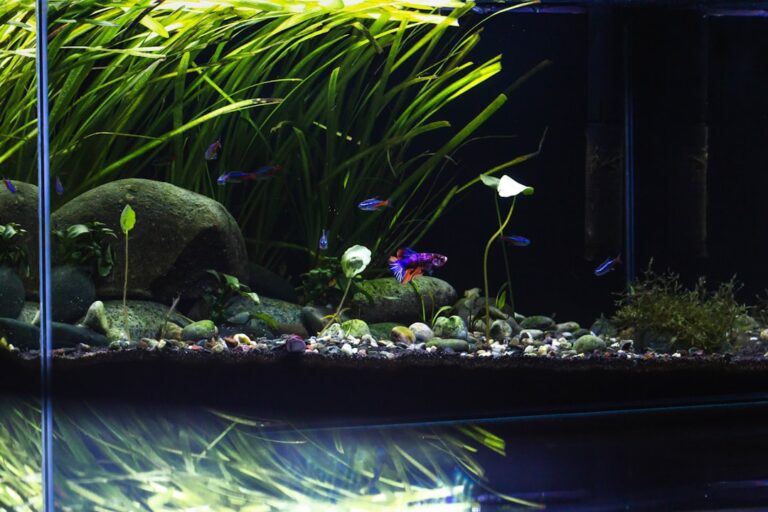
My latest tank is a 29-gallon planted setup. I set it up in November during a cold snap. The house was 65 degrees inside. I knew better by then. I used a heater to bring the tank to 80°F. I added MicroBacter Start. I added a pinch of fish food. I added a used sponge from my established tank. I set a timer for 14 days and told myself I wouldn’t test water until day 10.
I tested on day 8. Couldn’t help myself. Ammonia: 0. Nitrites: 0. Nitrates: 10 ppm. The tank had cycled without me doing anything dramatic. No sludge. No phone calls at 11 PM. No emergency water changes. Just temperature, surface area, and a product that actually worked in the conditions it needed.
The Java ferns I’d planted day one hadn’t melted. The spider wood hadn’t grown fungus. The water stayed clear. I added six neon tetras on day 10. They’re still alive five months later. I haven’t tested ammonia once since that first check.
Would I buy another bottle of generic beneficial bacteria? Probably not. I’d use a seasoned sponge first. But if I didn’t have access to an established tank, I’d buy MicroBacter Start, warm the water to 82, add surface area, and add ammonia slowly. I’d give it two weeks and trust the test kit over the bottle’s promises.
The bottle isn’t the solution. The bottle is a tool. And like every tool, it only works when you use it right. The difference between a three-week cycle and a six-week cycle isn’t the brand you buy. It’s what you do after you pour it in.
📷 Photos: Viktor Bystrov (Unsplash), David Dvořáček (Unsplash)