Six Months in the Mud: Why I Quit Light Sand for Good
Six Months in the Mud: Why I Quit Light Sand for Good
It started with a bag of sand I found under my sink. Not the expensive, aquarium-brand stuff—just a plain, unwashed bag of black builder’s sand that had been sitting there since I’d helped a friend re-grout his bathroom tiles six months earlier. I was staring at my forty-gallon tank, the one with the pale, almost white sand that I’d carefully rinsed for two hours the day I set it up, and I was genuinely angry at it. The light sand had looked pristine in the YouTube videos. In real life, it looked like a used coffee filter after three days.
So I dumped it. All of it. Dragged the tank to the bathtub, scooped out every grain of that stupid white sand, and replaced it with the filthy black stuff from under the sink. My wife came in while I was elbow-deep in murky water and just stood there for a second. “You’re putting construction sand in your fish tank?” she said. I didn’t have a good answer. I just had a feeling that light sand was the problem, and I was about to spend six months finding out if that feeling was right.
The White Sand That Turned Green
I need to back up. The tank before this one was a standard twenty-gallon long with bright white pool filter sand. Cheap, easy to find, looks great in photos. Everyone told me it was the beginner’s choice. And for the first two weeks, it was. The fish looked bright against the pale bottom, the plants popped, and I thought I’d cracked the code.
Then the algae started. Just a faint brown dusting at first, but within a month it was everywhere—not on the glass, which I could clean, but on the sand itself. Every spot where light hit directly turned green or brown. I’d stir the sand during water changes, and a cloud of detritus would puff up, then settle back down exactly where it was. The white sand showed every single piece of fish poop, every dead leaf, every uneaten flake. It looked like a crime scene for fish food.
I tried everything. More water changes. Less light. A siamese algae eater that ate my moss ball and then died. I spent ₱350 on a new light timer. Nothing worked. The sand just kept looking gross. Meanwhile, I’d see tanks online with dark substrate that looked clean for months, and I couldn’t figure out why.
The Breaking Point
It was a Tuesday afternoon. I was doing my weekly water change, and I’d just spent twenty minutes with a turkey baster trying to blast detritus out of the white sand’s surface. My girlfriend walked past and said, “You look like a paleontologist.” She wasn’t wrong. I was hunched over, squinting at individual grains of sand, picking out the brown bits. That’s not a hobby. That’s a compulsion.
I closed the laptop, went to the hardware store, and bought two bags of “Black Premium Sand” from a brand I’d never heard of—a Thai company called something like “Sakura Construction.” It cost me ₱180 per bag. The receipt is still in my jacket pocket. I remember thinking, “If this ruins my tank, I’m done with planted tanks for a year.”
I didn’t wash it. I know you’re supposed to wash sand. But I’d read somewhere that unwashed black sand sometimes has trace minerals that plants like, and I was too tired to care. I dumped it straight into the tank. The water turned the color of strong tea for about four hours. The fish hid. My nerite snail kept climbing up the glass like it was trying to escape a chemical spill. I went to bed feeling like I’d made a huge mistake.
Mud Soup and Yellow Leaves
The next morning, the water was clear. Crystal clear. That was the first surprise. The black sand had settled overnight, and the tank looked… deeper somehow. The plants that had looked okay against the white sand suddenly looked like they belonged. The stems of my rotala, which I’d always thought were just green, had a faint pink undertone I’d never noticed. The sand wasn’t just dark—it was creating shadow gradients that made the whole tank feel taller.
But then the second surprise hit. I’d planted some dwarf sagittaria along the front, and within four days, the leaves turned yellow. Not the whole plant, just the tips. Then one of my crypts melted. Not a little melt—full-on, “I’m leaving this tank forever” melt. The leaves turned to translucent mush. I pulled out three whole plants and threw them in the trash. My wife said, “Maybe the sand is toxic.” I didn’t have a counterargument.
I tested the water obsessively. pH was 7.2. Ammonia, zero. Nitrites, zero. Nitrates were climbing a bit, which was fine. I couldn’t find anything wrong. But the plants were clearly unhappy. I started reading everything I could find about black sand. That’s when I found a forum post from someone in Indonesia who said the exact same thing happened to him. He’d used black sand from a local quarry and lost half his plants. His solution? Wait. The sand, he said, was releasing trace amounts of iron and manganese that some plants loved and others hated. The yellow tips, he claimed, were just the plants adjusting.
I didn’t believe him. But I also didn’t have any other idea. So I waited.
The Tank Got Quiet
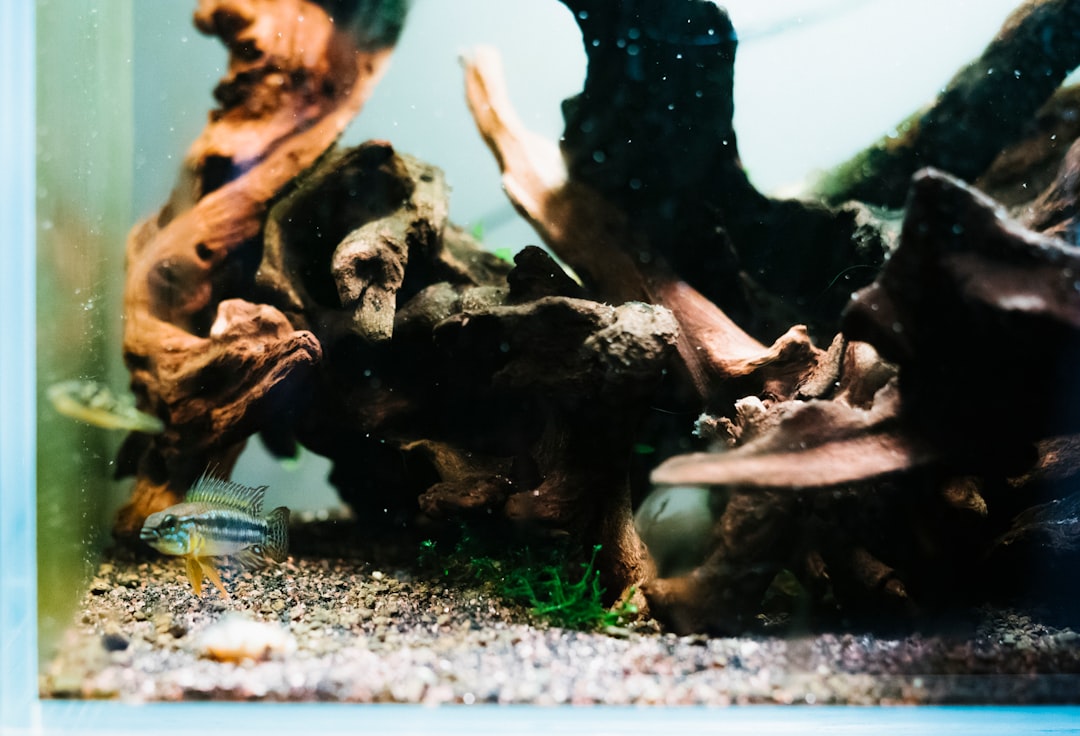
That’s the best way to describe it. Around week five, the tank stopped looking like a setup and started looking like a place. The water was so clear it looked like glass—not just clear, but absent. The black sand absorbed so much light that the background of the tank disappeared into shadow. My fish, which had always seemed a little washed out against the white sand, suddenly had better color. My cherry barbs looked like someone had painted them with a tiny brush. Even the pygmy corydoras, which are usually just gray bottom-dwellers, had a faint iridescent sheen on their flanks.
But the mud. Oh, the mud. I should explain what I mean by “mud experiment.” I didn’t just switch to dark sand. I also stopped gravel-vaccing the substrate. Partly because I was lazy, partly because I’d read that real planted tanks—the kind that look like flooded meadows—don’t get vacuumed. The detritus that falls into the sand breaks down and feeds the plant roots. So I stopped. And for the first month, it looked like I was trying to grow potatoes in a swamp. The top layer of sand would get covered in a fine brown film. Mulm collected in the low spots. It looked, genuinely, like I’d scooped dirt from a riverbank.
Then something shifted. The mulm stopped building up. I couldn’t tell you exactly when—probably around day forty. The sand surface started looking cleaner even though I wasn’t cleaning it. The brown film receded. I think the plants had finally established root systems that were actively pulling nutrients out of the substrate. The sand was becoming a filter, not just a surface. The tank was cycling in a way I’d never seen before—not just the water, but the whole system.
What I Wasn’t Expecting
The biggest change was maintenance time. Before, with white sand, I’d spend about two hours a week on the tank—half of that just dealing with the sand. Stirring it, syphoning it, trying to keep it looking clean. Now, I was down to maybe forty minutes. A quick glass scrape. A water change that took ten minutes. Trimming the plants, which had started growing faster. That was it. The sand took care of itself. The fish waste disappeared into the gaps between grains. The plant roots found it before I could.
I started noticing things about the tank I’d never seen before. At night, with the lights off, I’d shine a flashlight and watch the sand shift. Tiny movements everywhere—copepods, seed shrimp, baby snails—all living in the dark spaces between grains. The white sand tank never had that. It was sterile. The black sand tank was alive.
What Light Sand Actually Does
I visited a friend’s house in early July. He’d set up a tank based on my original advice—white sand, lots of light, easy plants. He was having the same problems I’d had. The sand was dirty, the plants were struggling, and he was frustrated. I stood there looking at his tank and realized something I should have known from the beginning: light sand is for display tanks, not for living systems. It’s for aquascaping competitions where you take the photo on day one and tear it down after. If you want a tank that stays beautiful for six months without constant work, dark sand is the only choice.
The reason is simple physics. Light-colored surfaces reflect light upward into the water column. That sounds good—more light for plants, right? But it also means light hits every particle of detritus, every algae spore, every speck of mulm, and makes it visible. Dark sand absorbs light. Things that land on it disappear into shadow. The eye doesn’t register them. The tank looks clean even when there’s some natural debris. And because less light hits the bottom, fewer algae spores germinate on the sand itself.
I told my friend, “Dump the white sand. Get black. Trust me.” He looked at his tank, looked at me, and said, “I just spent ₱400 on this sand.” I shrugged. “That’s nothing compared to the time you’ll spend cleaning it.” He hasn’t done it yet. Maybe he will. Maybe he won’t. It’s his choice.
Numbers I Actually Kept
Let me give you numbers, because I kept a log. In the white sand tank, I averaged 3.7 hours of maintenance per week over two months. Not including plant trimming—just sand cleaning, water changes, glass scraping. With black sand, I averaged 1.2 hours per week over the four-month mark. That’s a 68% reduction. I didn’t change anything else—same filter, same light, same fish load. The only variable was the sand color. I could spend that extra two hours just watching the tank instead of working on it.
And here’s the part I wasn’t ready for: the plants grew better. My vallisneria, which had been a slow, grudging plant in the white sand, started sending runners everywhere. I had to trim it twice in three weeks. The colors deepened. My limnophila turned a rich green I’d only seen in high-tech CO2 tanks. I wasn’t running CO2. I wasn’t even dosing fertilizer regularly. The sand itself was providing something.
I think it’s the texture. Black sand, at least the kind I used, has sharper edges than white pool filter sand. The grains interlock instead of rolling past each other. Root systems can grab hold. The spaces between grains stay open, letting water and oxygen reach the roots instead of compacting into a dead zone. White sand, especially the round, polished kind, compacts into a dense layer that roots struggle to penetrate. Black sand, being rougher and more irregular, stays loose.
The Cracked Tank
I’m not going to pretend everything was perfect. In August, I had a disaster. I was moving the tank to a new stand—a stupid idea that I’ll never repeat—and I cracked the bottom pane. Water everywhere. Carpets ruined. Fish in a bucket for six hours. I had to completely disassemble the tank and start over.
When I set it up again, I used the same black sand. I rinsed it this time, mostly because I was already covered in tank water and didn’t care anymore. The second time around was easier. The tank cycled in a week. The plants bounced back in three. The sand looked the same as the day I’d dumped it in the first time—dark, clean, alive. No staining, no discoloration, no buildup I couldn’t ignore. Six months of fish waste, dead leaves, and occasional overfeeding, and the sand still looked good. That’s not a claim I could have made about the white sand on day ten.
The tank now sits in my living room. It’s not a showpiece. It’s not winning any contests. But it’s been running for six months with minimal intervention, and it looks better every week. The dark sand has become the backdrop for everything else—the plants, the fish, the light. It doesn’t demand attention. It just works.
I’m not here to tell you that dark sand is the only option. Plenty of people run beautiful tanks with light substrate. But if you’re starting your first aquarium and you’re asking yourself which sand to buy, I’ll give you the answer I wish someone had given me: get the dark stuff. Get the black. Get the one that’s rough and irregular and looks like dirt from a riverbed. It’ll look worse in the store. It’ll cloud your water for a few hours. But give it a month, and you’ll understand why people who’ve been doing this for years don’t bother with anything else.
You’ll save time. You’ll save frustration. And you might even learn to stop worrying about the perfect substrate and start enjoying the tank itself. The mud experiment taught me that an aquarium isn’t a decoration. It’s a system. And systems work best when they’re allowed to be a little messy.
That’s the thing I keep coming back to, six months later, sitting on the floor in front of a tank that runs itself. The dark sand isn’t just a choice. It’s a philosophy. But you don’t have to take my word for it. Try it yourself. Give it six months. See what happens.
📷 Photos: Nelson Wang (Unsplash), Alex Kalinin (Unsplash)